
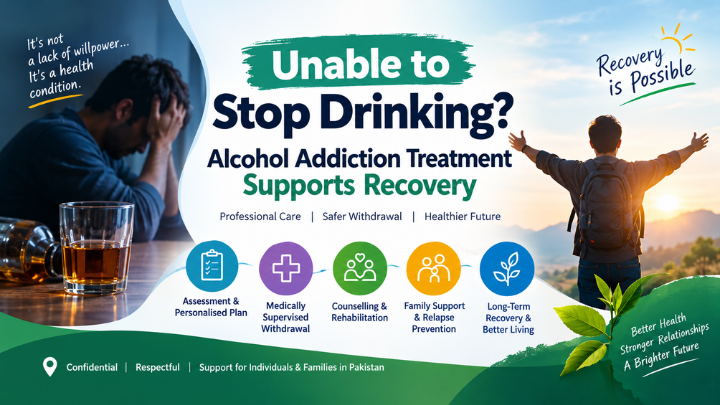
Being unable to control or stop drinking may indicate an alcohol-related disorder rather than a lack of willpower. Alcohol addiction treatment offers structured professional care that may include assessment, medically supervised withdrawal, counselling, rehabilitation, and ongoing support for long-term recovery. For individuals and families in Pakistan, confidential and respectful care can help address concerns about stigma, privacy, and safety. Since alcohol dependence affects everyone differently, a qualified professional should assess the person’s health, drinking patterns, mental wellbeing, and withdrawal risk to determine the most appropriate treatment approach.
1. How to Recognise When Alcohol Use May Require Treatment
Recognising when drinking has become difficult to control can help a person seek support before the problem causes more serious consequences. Alcohol dependence does not affect everyone in the same way, but certain patterns can indicate that professional assessment may be appropriate. These can include repeated unsuccessful attempts to stop drinking, strong cravings, needing more alcohol to experience the same effect, or continuing to drink despite problems at home, work, or in personal life.
Common Effects of Problematic Alcohol Use
Alcohol-related problems can gradually affect different areas of wellbeing. Frequent or heavy drinking may contribute to physical health concerns, changes in mood, sleep difficulties, strained family relationships, reduced performance at work, and problems managing everyday responsibilities. Some people may also begin relying on alcohol to cope with stress, anxiety, difficult emotions, or challenging situations, which can make it harder to reduce their drinking without appropriate support.
Identifying these patterns early can make it easier to discuss the situation with a qualified healthcare professional. Early support may help determine the severity of the problem and whether medical treatment, counselling, rehabilitation, or another form of care may be suitable. Alcohol use disorder is a recognised health condition, so struggling to stop should not automatically be viewed as a lack of discipline or personal weakness.
Signs That Professional Support May Be Needed
Several warning signs may suggest that professional support is worth considering:
- Difficulty controlling how much or how often alcohol is consumed.
- Repeated attempts to quit or reduce drinking that do not last.
- Strong cravings or frequent thoughts about drinking.
- Using alcohol frequently as a way to deal with stress, anxiety, sleep difficulties, or emotional challenges.
- Continuing to drink despite negative effects on physical health, relationships, finances, work, or other responsibilities.
- Needing increasingly larger amounts of alcohol to achieve an effect previously experienced with smaller amounts.
When Alcohol Withdrawal Requires Medical Attention
Withdrawal symptoms deserve particular attention. For people who are physically dependent on alcohol, suddenly stopping can sometimes lead to serious complications. Symptoms may include shaking, sweating, nausea, anxiety, agitation, and, in severe cases, seizures, confusion, or hallucinations. Anyone who regularly drinks heavily or experiences withdrawal symptoms should seek medical advice before attempting to stop abruptly.
2. What Alcohol Addiction Treatment Can Involve
Alcohol addiction treatment usually begins with an assessment rather than a one-size-fits-all programme. A qualified healthcare professional may consider the person’s drinking pattern, physical health, mental wellbeing, previous attempts to stop, current medications, withdrawal history, and other individual circumstances. This assessment helps determine the level of support required and whether medical supervision is necessary.
Assessment and Personalised Treatment Planning
For someone who has developed physical dependence on alcohol, medically supervised detoxification may be an important part of treatment. Detoxification focuses on helping the body adjust to reduced or stopped alcohol use while monitoring the person for withdrawal symptoms. Depending on the individual’s condition, healthcare professionals may provide appropriate medical care to manage withdrawal safely.
However, detoxification is only one part of recovery. It can help manage the physical effects of stopping alcohol, but it does not necessarily address the behaviours, emotions, or circumstances that contribute to continued drinking.
Counselling and Rehabilitation Support
Long-term treatment may include counselling and psychological support to help individuals recognise triggers, develop healthier coping strategies, manage cravings, and make sustainable changes. Some individuals may benefit from residential or inpatient rehabilitation, particularly when there is a risk of severe withdrawal, significant physical or mental health concerns, or limited support available at home.
Others may be suitable for outpatient treatment, depending on their assessment. The appropriate setting should be determined by qualified professionals rather than based solely on personal preference.
Family Support and Relapse Prevention
Treatment can also involve family support, recovery planning, relapse-prevention strategies, and ongoing follow-up. Where clinically appropriate, healthcare professionals may consider additional medical interventions as part of a broader treatment plan. Combining suitable forms of support can help address the different factors involved in alcohol dependence.
Why Medically Supported Withdrawal Matters
Stopping alcohol suddenly is not necessarily safe for everyone. People who have developed physical dependence may experience withdrawal symptoms after reducing or stopping alcohol, and in some cases these can become severe. Possible complications include seizures, severe confusion, hallucinations, or other potentially dangerous symptoms.
This is why a person who drinks heavily or regularly and experiences withdrawal symptoms should seek medical advice before attempting to quit suddenly. Professional assessment can help determine the level of withdrawal risk and whether supervised detoxification is appropriate.
3. Building a Sustainable Recovery After Treatment
Completing alcohol detoxification can be an important first step, but detox alone does not necessarily address the reasons behind problematic drinking. Long-term recovery often requires continued support to understand drinking patterns, manage triggers, develop healthier coping strategies, and reduce the likelihood of returning to harmful alcohol use.
Continuing Counselling and Recovery Support
Ongoing counselling can help individuals work through emotional difficulties, identify situations that increase the urge to drink, and develop practical ways to respond to cravings. A recovery plan may also include relapse-prevention strategies, healthy daily routines, regular sleep, physical activity, meaningful activities, and continued contact with appropriate healthcare or support professionals.
Identifying Triggers and Involving Family
Understanding personal triggers can make recovery planning more practical. Triggers may include prolonged stress, difficult emotions, certain social situations, particular environments, or contact with people and circumstances associated with previous drinking. Recognising these patterns can help an individual and their treatment team develop healthier ways to manage challenging situations.
Family involvement can also be valuable when the individual is comfortable with it and when it forms part of an appropriate treatment plan. Supportive family members may help encourage healthy routines, recognise potential warning signs, and create a more stable environment. At the same time, treatment providers should respect the person’s privacy, consent, and individual preferences.
Managing Relapse and Returning to Recovery
Recovery is not always a completely linear process. If someone returns to drinking after treatment, it does not mean that recovery is impossible or that previous treatment was pointless. Instead, it can be an opportunity to reassess the person’s circumstances, identify what contributed to the setback, and determine whether additional or different support is needed.
Choosing Appropriate Ongoing Care
For individuals and families in Pakistan, choosing a treatment provider should involve more than looking at the availability of a rehabilitation programme. It is important to ask about the qualifications of the professionals involved, the treatment methods used, medical supervision, confidentiality practices, emergency arrangements, and the type of aftercare available once residential or intensive treatment ends.
Evidence-based and individualised care is particularly important because alcohol-related problems can occur alongside physical health or mental-health concerns. Where additional needs are identified, appropriate referral to qualified medical, psychiatric, or psychological professionals may be necessary. A continuing care approach can provide greater support for maintaining progress beyond the initial treatment period..
Conclusion
Being unable to stop drinking can be a sign that professional support may be needed. Alcohol addiction treatment can combine professional assessment, medically appropriate withdrawal management, counselling, rehabilitation, relapse prevention, and ongoing recovery support based on an individual’s needs. Anyone struggling with alcohol use, or a family concerned about a loved one, should seek qualified professional advice rather than attempting potentially risky withdrawal without medical guidance. Seeking treatment is a positive step toward better health, greater stability, healthier relationships, and long-term recovery.