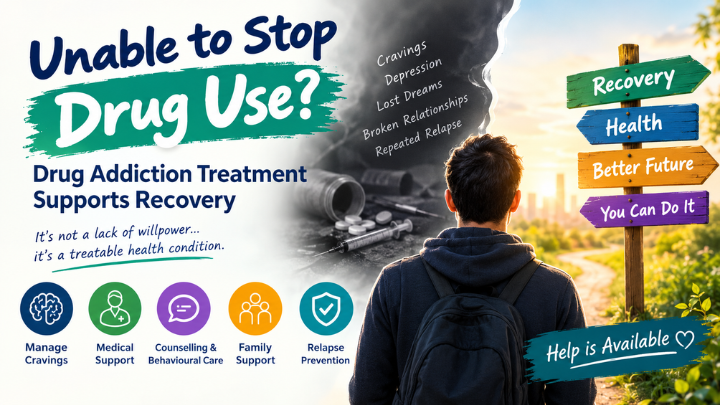
Repeated attempts to stop drug use can be challenging due to cravings, withdrawal symptoms, and emotional difficulties. Professional drug addiction treatment can provide appropriate assessment, withdrawal management when needed, counselling, and ongoing recovery support. In Pakistan, concerns about social stigma, family relationships, and privacy may discourage people from seeking help. Shifa Rehab Center can help individuals and families explore available rehabilitation options and understand the next steps towards recovery.
1. Why Is It Difficult to Stop Drug Use Without Professional Support?
Stopping drug use can be challenging when cravings, withdrawal symptoms, or emotional difficulties interfere with daily life. Repeated attempts to quit without lasting success may indicate that professional drug addiction treatment could help.
Signs You May Need Professional Help
Signs that drug use may be difficult to manage include:
- Repeatedly trying to stop without lasting success.
- Experiencing strong cravings or spending considerable time obtaining or using drugs.
- Neglecting work, education, or family responsibilities.
- Continuing drug use despite health, financial, or relationship problems.
- Experiencing changes in sleep, mood, or concentration.
- Developing withdrawal symptoms when reducing or stopping certain substances.
These signs do not establish a diagnosis, but they may indicate the need for professional assessment. Withdrawal risks vary by substance and individual health. Stopping certain substances without medical advice can cause serious complications, so professional guidance is important.
Effects on Daily Life and Family
Ongoing drug use can affect physical health, emotional wellbeing, work performance, education, finances, and family relationships. Some individuals may withdraw from social activities or struggle to maintain everyday responsibilities.
Families may experience stress, uncertainty, and financial pressure. In Pakistan, fear of social judgement or damage to family reputation can also discourage people from seeking help.
Why Professional Support Matters
A compassionate approach can help families encourage treatment without blaming or humiliating the individual. Listening without judgement, maintaining appropriate boundaries, and seeking reliable healthcare information can support constructive conversations.
Drug use disorders are complex health conditions. Professional assessment can help identify suitable treatment options, while evidence-based care, counselling, and family support can help individuals address challenges and work towards recovery.
2. How Does Drug Addiction Treatment Support Recovery?
Professional drug addiction treatment helps individuals address substance use through appropriate healthcare, psychological support, and recovery planning. Treatment depends on the substance involved, the person’s health, symptoms, and previous treatment experiences. Understanding the main stages can help individuals and families make informed decisions about seeking support.
Initial Assessment and Withdrawal Management
Treatment generally begins with an assessment by a qualified healthcare professional. This assessment considers the substance used, frequency and duration of use, physical and mental health, medications, previous treatment, and possible withdrawal risks. When necessary, medical supervision can help manage withdrawal symptoms and identify complications. Stopping certain substances without medical advice can be dangerous, so professional guidance is important.
Individualised Rehabilitation and Counselling
Following assessment, the treatment plan may include medical care, structured rehabilitation, counselling, and support for related health or social concerns. Psychological counselling can help individuals recognise triggers, manage stress, develop healthier coping strategies, and address circumstances associated with substance use. Where appropriate, family involvement may provide additional support while respecting personal privacy and treatment needs. Treatment duration varies, and no programme guarantees recovery for everyone.
Relapse Prevention and Continuing Care
Relapse prevention involves identifying high-risk situations, developing strategies to manage cravings, maintaining healthy routines, and attending follow-up appointments. If drug use resumes, professional support can help reassess treatment needs and identify areas requiring additional care. Continuing support may include counselling, follow-up assessments, and appropriate medical services. Regular reviews help healthcare professionals adjust treatment plans as individual needs and recovery goals change.
Choosing Appropriate Drug Addiction Treatment in Pakistan
Individuals and families exploring drug addiction treatment in Pakistan can contact Shifa Rehab Center to ask about its assessment process, available treatment services, professional supervision, privacy arrangements, and continuing-care options. Confirming these details directly can help families understand the available support and make informed decisions. Treatment should be guided by qualified professionals and tailored to individual needs. With appropriate care and ongoing support, individuals can work towards improved wellbeing and recovery.
3. How Can Individuals and Families Take the First Step Towards Recovery?
Seeking drug addiction treatment can feel difficult, particularly when individuals and families worry about social stigma, privacy, or the cost of care. Taking practical steps can make the process easier and help people make informed decisions. In Pakistan, seeking reliable professional advice can help individuals access appropriate support.
Seek Professional Advice Early
The first step is to contact a qualified healthcare professional or an appropriate rehabilitation service. Early assessment can help identify health concerns, withdrawal risks, and suitable treatment options. Before an appointment, individuals or family members can prepare information about substances used, frequency of use, current symptoms, medications, existing health conditions, and previous treatment experiences.
Ask Questions Before Choosing a Rehabilitation Service
Families should clarify staff qualifications, available treatment methods, medical supervision, expected costs, privacy policies, family involvement, and arrangements for follow-up care. Discussing confidentiality directly with the provider can help individuals understand how their personal information will be handled and make informed decisions about treatment.
Support Recovery Without Judgement
Family support can make a difference when it involves patience, respectful communication, and realistic expectations. Listening without judgement, encouraging professional help, and establishing healthy boundaries may help individuals feel more comfortable discussing their concerns. Threats, humiliation, and unrealistic promises can increase distress and make these conversations more difficult.
Prioritise Safety and Individual Needs
Treatment decisions should reflect the person’s age, physical health, mental health, family circumstances, and safety needs. Families should not attempt to manage potentially dangerous withdrawal symptoms at home or give unprescribed medication. If someone becomes unconscious, has difficulty breathing, experiences a seizure, or develops other severe symptoms, seek emergency medical assistance immediately.
By taking these steps, individuals and families can approach drug addiction treatment with greater clarity and confidence. Contacting Shifa Rehab Center to ask about its available services and assessment process may help them explore suitable options and determine the next steps towards recovery.
Conclusion
Difficulty stopping drug use does not mean a person lacks determination or cannot recover. With professional assessment, appropriate treatment, counselling, family support, and continuing care, individuals can work towards improved health and lasting recovery. In Pakistan, seeking help without fear of social judgement can be an important step towards positive change. Contact Shifa Rehab Center to learn about its available services, discuss individual needs, and explore suitable options for beginning the recovery process.