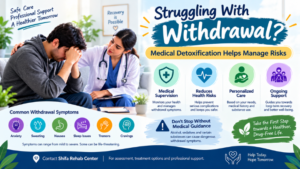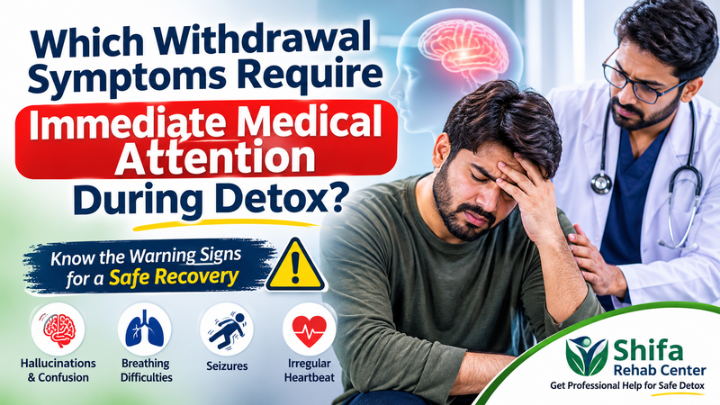
Withdrawal may develop when a person reduces or stops using alcohol, drugs, or certain medications after prolonged use. While some withdrawal symptoms are mild, others can become severe and require prompt medical attention to prevent serious complications.
Recognizing warning signs early helps reduce complications and supports safer detoxification.
1. Serious Withdrawal Symptoms That Require Immediate Medical Attention
Withdrawal symptoms vary depending on the substance used, duration of use, and an individual’s health condition. Certain warning signs may indicate serious medical complications and should never be ignored.
Severe Physical Warning Signs
Some physical symptoms require urgent medical evaluation:
- Seizures or Convulsions: Sudden, uncontrolled body movements may indicate severe withdrawal, particularly from alcohol or benzodiazepines.
- Difficulty Breathing: Breathing problems and chest pain require immediate emergency attention.
- Severe Dehydration: Persistent vomiting and diarrhoea can cause significant fluid and electrolyte loss.
- High Fever: Unusual increases in body temperature may indicate serious complications.
- Irregular Heartbeat: An unusually fast or irregular heartbeat requires medical assessment.
- Loss of Consciousness: Fainting or becoming unresponsive is a medical emergency.
Serious Psychological and Neurological Symptoms
Withdrawal can also affect brain function, behaviour, and emotional well-being.
Important warning signs include:
- Hallucinations: Seeing or hearing things that are not actually present.
- Severe Confusion: Difficulty recognizing people or understanding surroundings.
- Extreme Agitation: Unusual restlessness, aggression, or severe anxiety.
- Suicidal Thoughts: Thoughts of self-harm or suicide require immediate mental health intervention.
These symptoms should not be managed through home remedies or self-medication. Families should seek emergency medical assistance without delay.
2. Medical Risks and Factors That Increase Withdrawal Complications
When someone regularly uses alcohol or drugs, the body gradually adapts to their presence. Stopping these substances can disrupt normal body functions and cause physical or psychological reactions.
The severity of withdrawal depends on the substance involved, duration of use, previous withdrawal experiences, and existing health conditions.
Withdrawal Risks Associated With Different Substances
Different substances can produce different withdrawal complications.
Alcohol Withdrawal
Symptoms may include sweating, shaking, anxiety, and sleep disturbances. Severe cases can lead to seizures or delirium tremens, a potentially life-threatening condition involving confusion and hallucinations.
Benzodiazepine Withdrawal
Suddenly stopping these medications after prolonged use can cause severe anxiety, tremors, and potentially dangerous seizures.
Opioid Withdrawal
Common symptoms include muscle pain, nausea, vomiting, diarrhoea, sweating, and intense cravings. Severe fluid loss can contribute to dehydration.
Stimulant Withdrawal
Withdrawal from substances such as crystal meth may involve exhaustion, sleep disturbances, depression, and intense cravings. Severe depression and suicidal thoughts require urgent attention.
Factors That Increase Withdrawal Complications
Certain circumstances can increase the risk of serious withdrawal symptoms:
- Long-Term Substance Use: Prolonged or heavy use may increase withdrawal severity.
- Previous Withdrawal Complications: A history of seizures or severe withdrawal requires careful medical assessment.
- Existing Health Concerns: Physical illnesses and mental health conditions can complicate detoxification.
- Multiple Substance Use: Combining alcohol, medications, or recreational drugs can make withdrawal more unpredictable.
- Unsupervised Detox: Stopping certain substances suddenly without medical guidance may increase the risk of serious complications.
Understanding these factors helps healthcare professionals determine the appropriate level of monitoring and medical support.
3. Professional Medical Detoxification and Withdrawal Management
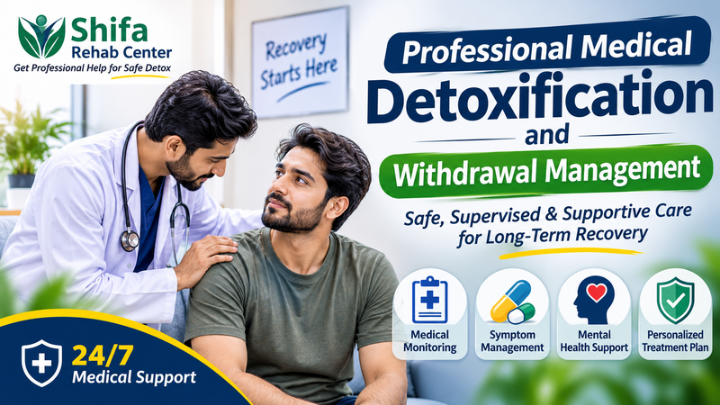
Medical detoxification provides supervised care to help individuals manage withdrawal symptoms while reducing the risk of complications.
The process begins with a professional assessment of substance use history, physical health, and psychological condition. Treatment is planned according to individual needs.
Medical Monitoring and Support During Detox
Professional monitoring helps healthcare teams identify changes in a person’s condition.
1. Vital Sign Monitoring
Healthcare professionals monitor blood pressure, heart rate, temperature, and other important health indicators.
2. Medication Management
Clinically appropriate medications may be prescribed to manage specific withdrawal symptoms and reduce complications.
3. Hydration and Nutritional Support
Medical teams assess fluid levels and nutritional needs, particularly when vomiting or diarrhoea occurs.
4. Emergency Medical Response
Serious symptoms such as seizures, unconsciousness, and severe confusion require immediate medical intervention.
5. Psychological Assessment
Mental health concerns, including severe anxiety and depression, may require additional professional support.
Medical detoxification helps manage the immediate withdrawal process. However, detox alone does not address every aspect of addiction. Continued rehabilitation, counselling, and follow-up care may also be necessary.
Emergency Care and Family Support During Withdrawal
Families play an important role in recognizing withdrawal warning signs and arranging timely medical assistance.
Immediate emergency care is necessary if someone experiences seizures, breathing difficulties, chest pain, unconsciousness, severe confusion, hallucinations, or suicidal thoughts.
In Pakistan, families can contact Rescue 1122 where available or visit the nearest emergency department.
Important Precautions for Families
- Do not leave an unconscious or severely confused person alone.
- Do not attempt to restrain someone forcefully during a seizure.
- Avoid giving unprescribed medications or home remedies.
- Do not encourage someone with alcohol or benzodiazepine dependence to stop suddenly without medical advice.
- Share information about substance use and existing medications with healthcare professionals.
Once immediate withdrawal risks have been managed, individuals may benefit from structured rehabilitation, counselling, and ongoing psychological support.
Shifa Rehab Center provides rehabilitation support for individuals seeking professional help with substance use concerns. Families can explore suitable treatment options based on individual needs and professional assessment.
Conclusion
Recognizing dangerous withdrawal symptoms during detox can help prevent serious medical complications. Seizures, hallucinations, breathing difficulties, severe confusion, and suicidal thoughts require immediate medical attention.
Professional supervision supports safer withdrawal management and helps individuals move towards continued rehabilitation. Seeking qualified care at the right time can be an important step towards recovery.