
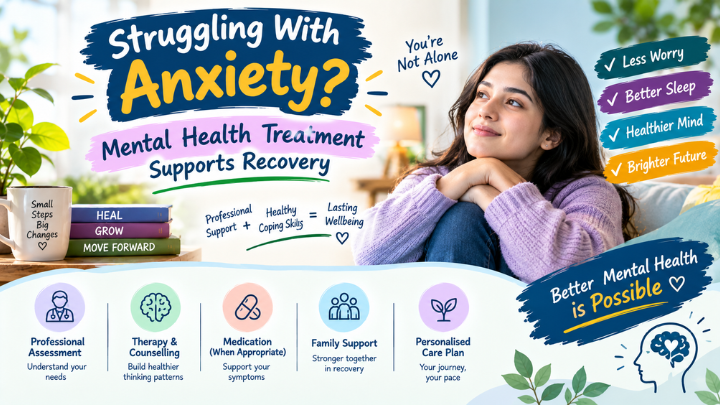
Anxiety can affect sleep, relationships, work, education, and daily life. While occasional worry is normal, persistent anxiety may require professional assessment. In Pakistan, stigma and fear of judgement can prevent people from seeking help. Mental health treatment offers support through professional assessment, psychological therapy, and medication when appropriate. With personalised care, individuals can develop healthier coping strategies and improve their wellbeing. Seeking help is a positive step towards recovery, not a sign of weakness.
1. How Anxiety Affects Daily Life and When to Seek Help
Anxiety can affect concentration, sleep, decision-making, relationships, and everyday responsibilities. For example, students may struggle with exams, employees may find it difficult to complete tasks, and some individuals may avoid social gatherings or public places. Physical symptoms, such as muscle tension or a racing heartbeat, can also make daily activities more challenging.
When anxiety persists, individuals may begin avoiding situations that make them nervous. Although avoidance can provide temporary relief, it may make everyday challenges harder to manage over time. Occasional stress is normal, but persistent worry that feels difficult to control or interferes with daily life may require professional assessment.
Common Signs and Symptoms of Anxiety
Anxiety symptoms vary from person to person and may include emotional signs such as persistent worry, fear, nervousness, irritability, or feeling overwhelmed. Physical symptoms can include sweating, a racing heartbeat, restlessness, muscle tension, stomach discomfort, and difficulty sleeping. Behavioural changes may involve avoiding uncomfortable situations, repeatedly seeking reassurance, withdrawing from social activities, or struggling to complete routine tasks.
Having these symptoms does not necessarily mean a person has an anxiety disorder. Their frequency, severity, duration, and impact on daily life are important considerations. Because anxiety symptoms can overlap with physical health conditions and other mental health concerns, consulting a qualified healthcare professional can help identify possible causes and determine suitable treatment options..
2. How Mental Health Treatment Supports Anxiety Recovery
Mental health treatment can help individuals understand anxiety, manage distressing symptoms, and handle everyday challenges. A qualified mental health professional assesses symptoms, their duration, possible triggers, medical history, and effects on daily life. This assessment helps identify suitable treatment options based on each person’s needs rather than relying on a one-size-fits-all approach.
Professional Counselling, Therapy and Medical Support
Psychological therapy: Cognitive behavioural therapy (CBT) can help individuals recognise unhelpful thought patterns, understand their emotions, and develop healthier responses to anxiety-provoking situations. Guided sessions can also build practical coping skills.
Medication when appropriate: A qualified medical professional may recommend medication after considering potential benefits, side effects, medical history, and individual circumstances. Patients should consult their prescribing professional before starting, stopping, or changing prescribed medication.
Progress monitoring and personalised care: Follow-up appointments allow professionals to review symptoms, assess progress, and adjust treatment when necessary. Recovery takes different amounts of time for different people, and setbacks do not necessarily mean treatment has failed.
Confidential and respectful support: In Pakistan, concerns about stigma and judgement may make it difficult to discuss mental health. A supportive environment should promote dignity, open communication, and privacy. Individuals can ask providers how their personal information is handled and what confidentiality limits apply under relevant professional and legal requirements.
Treatment outcomes and timelines vary depending on individual circumstances, symptom severity, and the support provided. Although appropriate mental health treatment can help people manage anxiety, no provider can guarantee an immediate or permanent cure. Professional guidance and personalised care can support progress towards improved emotional wellbeing.
3. Practical Ways to Manage Anxiety and Support Long-Term Wellbeing
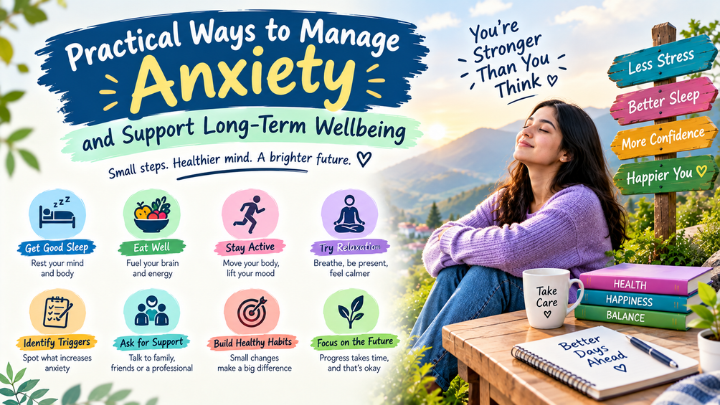
Everyday habits can support emotional wellbeing and complement professional mental health treatment. However, they should not replace clinical care when anxiety is severe, persistent, or interferes with daily activities. Developing a manageable routine and making gradual lifestyle changes can help individuals respond to stress more effectively.
Healthy Coping Strategies and Support at Home
Maintaining a consistent routine with regular sleep, balanced meals, physical activity, and realistic daily goals can support overall wellbeing. Gentle breathing exercises and mindfulness may also help some individuals manage tension. Breaking larger tasks into smaller steps can make daily responsibilities feel more manageable.
Recognising Triggers and Building Healthy Habits
Pay attention to situations or thoughts that increase anxiety. Keeping brief notes about these experiences may help identify patterns to discuss with a qualified mental health professional. Avoid using alcohol, recreational drugs, or medicines without medical guidance to manage anxiety, as these may create additional health risks.
Family Support and Professional Follow-Up
Trusted family members and friends can offer support by listening without judgement, respecting personal boundaries, and encouraging professional care. In Pakistan, where mental health stigma can discourage people from seeking help, supportive conversations may make it easier to discuss concerns. Family involvement should always respect individual privacy and preferences.
Regular follow-up appointments allow healthcare professionals to monitor progress and address treatment concerns or medication side effects. People seeking mental health support in Pakistan can check a provider’s qualifications, ask about treatment costs and appointment arrangements, and discuss privacy practices before beginning care. Never start, stop, or change prescribed medication without consulting the prescribing professional.
Managing anxiety is a gradual process, and strategies work differently for each person. Combining appropriate professional care, healthy routines, and supportive relationships can help individuals work towards improved emotional wellbeing over time.
Conclusion
Persistent anxiety can affect daily life, relationships, sleep, and emotional wellbeing, but appropriate mental health treatment can help individuals understand their symptoms and develop effective coping strategies. Professional assessment, evidence-based therapy, medication when appropriate, and healthy daily routines may support recovery. In Pakistan, seeking qualified mental health support is a positive step, not a reason for shame or fear of judgement. As every person’s needs and progress differ, treatment should be tailored to their circumstances. If anxiety is affecting your daily life, contact Shifa Rehab Center to enquire about available mental health support and assessment options.


Pingback: Why Does Anxiety Feel Worse at Night? Causes & Help