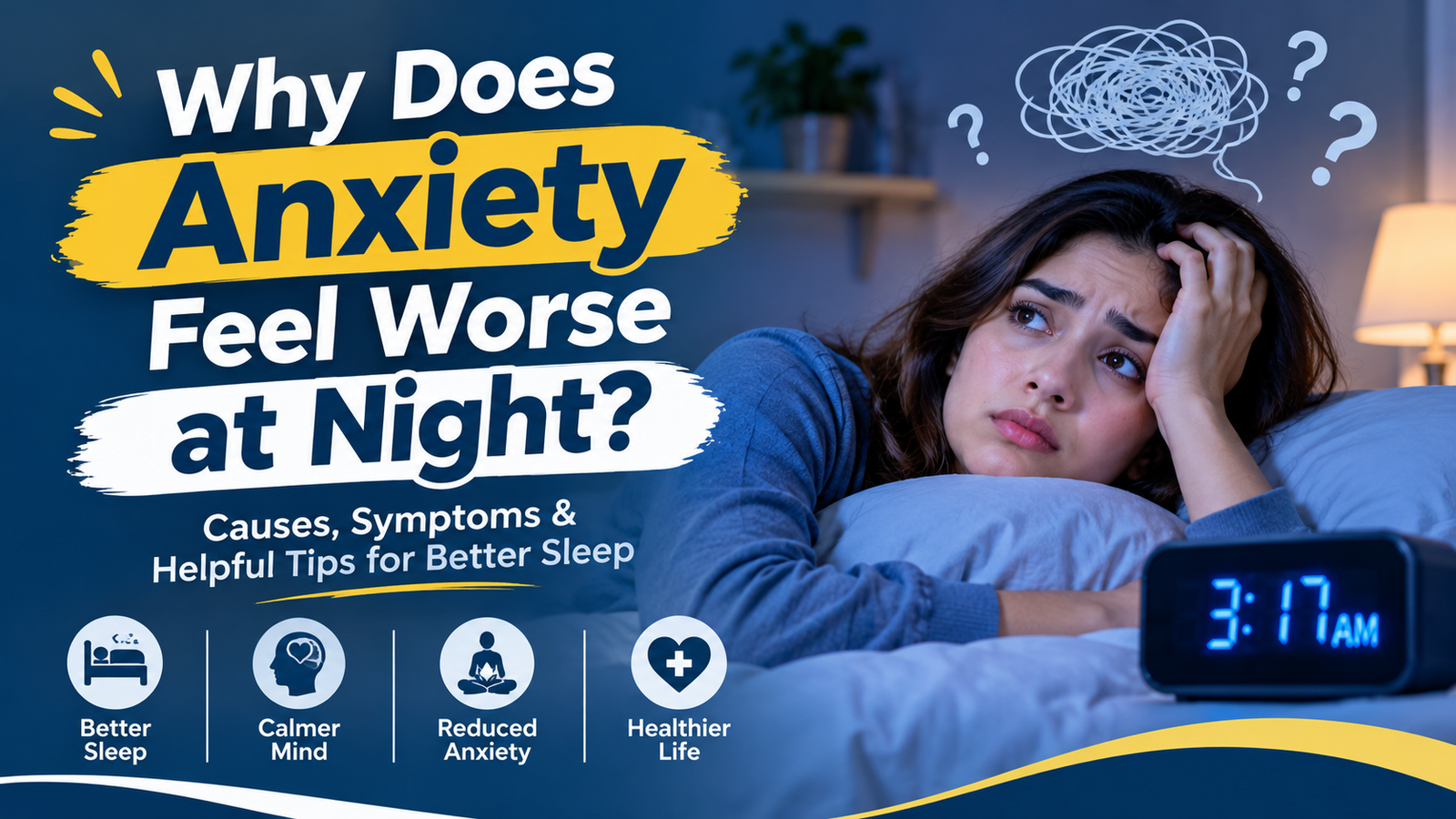
Anxiety can feel more intense at night when the surroundings become quiet and daytime distractions disappear. Many people experience racing thoughts, restlessness, fear or difficulty falling asleep, even when they feel relatively fine during the day. Everyday stress, emotional concerns and an irregular sleep routine can contribute to these feelings.
For people in Pakistan dealing with work pressure, financial worries, family responsibilities or relationship stress, nighttime anxiety can make it difficult to relax. Understanding why anxiety increases at night and how to manage it can help improve sleep and emotional well-being.
Why Does Anxiety Feel Worse at Night?
Nighttime anxiety can develop for several reasons. As the day ends, people have fewer activities to distract them, which can make worries, fears and uncomfortable emotions more noticeable. Stress accumulated throughout the day may also become harder to ignore when trying to sleep.
Common Causes of Nighttime Anxiety
Several factors can contribute to anxiety becoming more noticeable at bedtime:
- Overthinking and unresolved worries: Thoughts about work, finances, family issues, future responsibilities or past mistakes may become repetitive when there is nothing else demanding attention.
- Daily stress and emotional pressure: Ongoing stress can keep the body in a heightened state of alertness, making it difficult to relax even when a person is physically tired.
- Caffeine and screen time: Drinking tea, coffee or energy drinks late in the day may interfere with sleep. Using mobile phones at bedtime, particularly for stimulating content, can also delay sleep and increase mental alertness.
- Irregular sleep routines: Sleeping at different times, taking long daytime naps or staying awake late may disrupt the body’s sleep rhythm.
- Fear of not being able to sleep: After several nights of poor sleep, some people begin worrying about whether they will sleep again. This fear itself can increase anxiety and make falling asleep more difficult.
In some cases, nighttime anxiety may also be associated with anxiety disorders, depression, trauma or other health conditions. Identifying the underlying cause is important, particularly when symptoms occur regularly or begin affecting daily life.
How Does Nighttime Anxiety Affect Sleep and Daily Life?
Anxiety and sleep are closely connected. When a person feels anxious, the body may remain alert instead of transitioning into a relaxed state needed for sleep. Thoughts may become difficult to control, muscles may feel tense, and even minor sounds or physical sensations may seem more noticeable.
Common nighttime anxiety symptoms include:
- Racing thoughts and excessive worrying
- Restlessness or difficulty relaxing
- Faster heartbeat or a feeling of pounding heart
- Muscle tension or tightness
- Sweating or feeling unusually warm
- Difficulty falling asleep despite feeling tired
- Waking up during the night and struggling to sleep again
Not everyone experiences the same symptoms. Some people mainly struggle with thoughts, while others experience physical sensations that make them worried about their health.
How Poor Sleep Can Make Anxiety Worse
When anxiety repeatedly interrupts sleep, it can create a cycle that affects emotional and physical well-being. Poor sleep may leave a person feeling exhausted, irritable and less able to handle everyday problems.
For example, someone who sleeps poorly because of worries about work may feel less focused the next morning. Small problems may seem overwhelming, and they may become more worried about the next night’s sleep. Over time, this cycle can affect relationships, work performance, studies and overall quality of life.
In Pakistan, people may also face pressure to manage family responsibilities, education, jobs or financial challenges without openly discussing their emotional struggles. Keeping these concerns to oneself can sometimes increase feelings of isolation and distress.
Persistent sleep problems should not always be assumed to be caused by anxiety alone. Conditions such as sleep apnea, thyroid problems, medication effects and other health concerns can also interfere with sleep. A healthcare professional can help determine whether further assessment is needed.
How Can You Manage Nighttime Anxiety and When to Seek Help?
Nighttime anxiety can often be managed with healthier sleep habits, relaxation techniques and ways to cope with stressful thoughts. However, if anxiety is persistent or significantly affecting daily life, professional support may be helpful.
Effective Ways to Reduce Anxiety Before Bed
Making small changes to your evening routine can help your mind and body prepare for sleep.
1. Maintain a Consistent Sleep Schedule
Try going to bed and waking up at the same time every day, including weekends. A regular sleep schedule can help regulate your body’s internal clock and improve sleep quality over time.
2. Reduce Caffeine in the Evening
Tea is a common part of daily life in Pakistan, but drinking strong tea or coffee late in the evening may make it harder to fall asleep. Consider reducing caffeine intake in the hours before bedtime, particularly if you notice that it affects your sleep.
3. Practise Relaxation and Slow Breathing
Slow, comfortable breathing may help reduce physical tension and feelings of restlessness. You can also try gentle stretching, mindfulness or listening to calming sounds before bed. Avoid forcing yourself to relax; give your body time to settle.
4. Write Down Your Worries
If your mind keeps returning to unfinished tasks or stressful situations, write them down before bedtime. Making a short list of concerns and what you can address the following day may help you stop repeatedly thinking about them while trying to sleep.
5. Limit Screen Time Before Sleep
Constant scrolling, stressful news, social media arguments or work messages can keep your mind active. Try putting your phone away before bed and replacing screen time with a calm activity such as reading or listening to something relaxing.
6. Seek Professional Mental Health Support
If nighttime anxiety continues despite lifestyle changes, causes frequent sleep disruption or interferes with your everyday activities, consider consulting a qualified mental health professional. Treatments such as cognitive behavioural therapy (CBT) may help individuals understand anxious thought patterns and develop healthier coping strategies.
At Shifa Rehab Center, individuals struggling with anxiety, emotional distress and other mental health concerns can seek professional support. Mental health assessment and appropriate counselling can help identify contributing factors and determine suitable treatment options according to an individual’s needs.
You do not need to wait until anxiety becomes overwhelming to ask for help. Early support can help you better understand your symptoms and manage them before they significantly affect your quality of life.
Conclusion
Anxiety often feels worse at night because distractions decrease, unresolved worries become more noticeable and the mind struggles to switch into a relaxed state. When these feelings repeatedly interfere with sleep, they can also affect mood, concentration, relationships and daily functioning.
Developing a consistent sleep routine, reducing evening caffeine, practising relaxation and addressing stressful thoughts may help manage nighttime anxiety. If symptoms persist or become difficult to manage, professional support can help you understand the underlying causes and find appropriate treatment.
If nighttime anxiety is affecting your well-being, reaching out to a mental health professional at Shifa Rehab Center can be a positive step towards better emotional health, restful sleep and a healthier life.