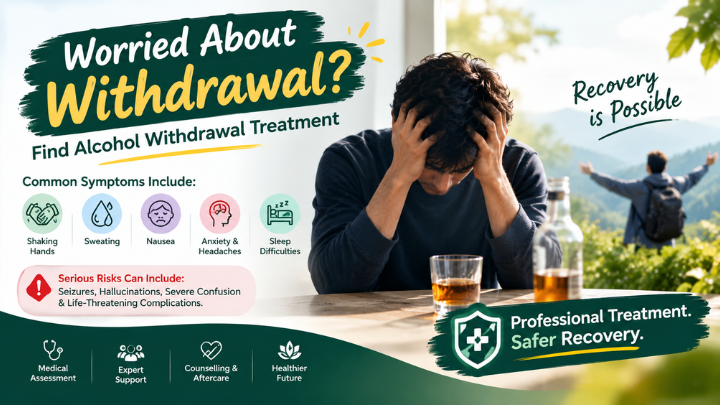
Alcohol withdrawal can occur when someone suddenly stops or reduces heavy alcohol use, causing symptoms such as shaking, sweating, anxiety, nausea, and sleep difficulties. In Pakistan, concerns about social stigma, family criticism, and the cost of treatment can discourage people from seeking professional help. However, withdrawal can cause serious complications, including seizures and severe confusion. Alcohol withdrawal treatment helps healthcare professionals assess risks and provide appropriate medical care. People who may be physically dependent on alcohol should seek medical advice before stopping to reduce the risk of dangerous complications and support safer recovery.
1. How Can You Recognise Alcohol Withdrawal Symptoms and Risks
Alcohol withdrawal can occur when someone who regularly drinks heavily suddenly stops or reduces their alcohol intake. Symptoms may include shaking hands, sweating, nausea, headaches, anxiety, and difficulty sleeping. In some cases, withdrawal can cause serious complications, such as seizures, hallucinations, or severe confusion.Severe alcohol withdrawal can lead to life-threatening complications that require urgent medical care. Recognising the warning signs and seeking professional alcohol withdrawal treatment can help individuals receive appropriate care and reduce the risk of complications.
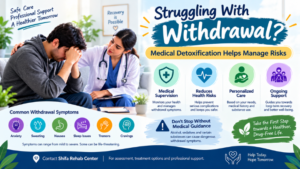
Common Alcohol Withdrawal Symptoms: Alcohol withdrawal can develop when a person who regularly drinks heavily suddenly stops or reduces their intake. Common symptoms include shaking hands, sweating, nausea, headaches, anxiety, irritability, and difficulty sleeping. Some people may also experience a rapid heartbeat or restlessness. Symptoms can begin within several hours of the last drink, but their timing and severity vary depending on drinking history, overall health, and previous withdrawal experiences.
Serious Warning Signs and Complications: Alcohol withdrawal may cause severe symptoms that require urgent medical attention. Seizures, hallucinations, severe confusion, and extreme agitation require immediate medical attention. Delirium tremens is a severe complication that may cause confusion, agitation, fever, and changes in heart rate or blood pressure. Without appropriate treatment, severe withdrawal can become life-threatening.
Why Professional Medical Support Matters: People who may be physically dependent on alcohol should not attempt withdrawal alone or rely on unverified home remedies. A qualified healthcare professional can assess symptoms, medical history, and risk factors to determine suitable care. In Pakistan, family judgement, social stigma, and privacy concerns may discourage people from seeking help. However, delaying treatment can increase health risks. Alcohol withdrawal treatment helps healthcare professionals reduce potential risks and recommend suitable care to support recovery.
2. How Does Alcohol Withdrawal Treatment Support Safe Recovery
Medical assessment and professional care help manage alcohol withdrawal symptoms according to each person’s needs. Healthcare providers evaluate a person’s drinking history, health conditions, and risk of complications before recommending suitable treatment. Depending on individual needs, care may include medical monitoring, prescribed medication, nutritional support, and counselling. After withdrawal, continued support such as cognitive behavioural therapy (CBT), relapse-prevention planning, and follow-up appointments can help individuals develop healthier coping strategies. With personalised care and ongoing support, people can work towards safer recovery and long-term wellbeing.
Medical Assessment and Supervised Withdrawal Care
Alcohol withdrawal treatment begins with a medical assessment of a person’s drinking habits, current symptoms, previous withdrawal experiences, medications, and existing health conditions. This assessment helps healthcare professionals identify possible risks and determine whether a patient needs hospital care, supervised residential treatment, or outpatient support.
Treatment may include prescribed medication, vital-sign monitoring, fluids, nutritional support, and thiamine when clinically indicated. Medication choices and dosages depend on individual needs and require professional supervision. Using sleeping pills, sedatives, or other unprescribed medicines can create additional risks. People who may be physically dependent on alcohol should seek medical advice before stopping because sudden withdrawal can be dangerous.
Counselling and Relapse Prevention
After acute withdrawal, continued support can help individuals understand their drinking patterns, recognise triggers, and develop healthier coping strategies. Depending on their needs, healthcare professionals may recommend psychological counselling, cognitive behavioural therapy (CBT), relapse-prevention planning, or assessment for related mental health concerns.
Counselling can help people manage stress, improve daily routines, and respond to emotional difficulties without relying on alcohol. Family involvement, with the person’s consent, may also provide encouragement and practical support throughout recovery.
Follow-Up Care and Ongoing Support
Regular follow-up appointments allow healthcare professionals to review progress and adjust treatment when necessary. Before choosing a provider in Pakistan, individuals and families should ask about staff qualifications, treatment costs, confidentiality policies, and available support services. With proper medical care, ongoing counselling, and a strong support network, individuals can improve their chances of sustaining recovery and managing alcohol-related challenges.
3. How to Find Suitable Alcohol Withdrawal Treatment in Pakistan
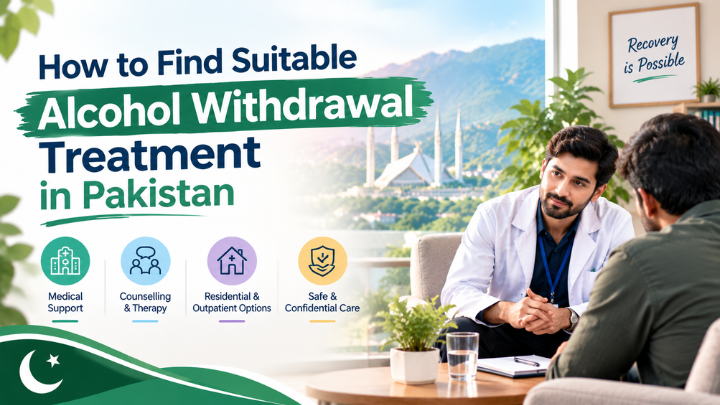
Choosing the right alcohol withdrawal treatment in Pakistan involves checking medical qualifications, safety measures, treatment costs, and confidentiality policies. Look for providers who can assess withdrawal risks, monitor symptoms, and arrange emergency hospital care when necessary. Ask about available treatments, staff experience, follow-up support, and counselling services before making a decision. Family members can encourage recovery by offering non-judgemental support and respecting privacy. Contact Shifa Rehab Center to learn about its services and explore treatment options that may meet your needs. If severe symptoms such as seizures, hallucinations, or confusion occur, seek immediate emergency medical assistance.
Check Medical Qualifications and Safety Measures
Choosing suitable alcohol withdrawal treatment in Pakistan requires careful consideration of medical expertise, patient safety, and ongoing support. Look for providers who involve qualified healthcare professionals in assessing withdrawal symptoms and identifying potential complications. Ask whether the facility can monitor patients, respond to medical emergencies, and arrange hospital transfers when necessary, as severe withdrawal may require urgent medical intervention.
Understand Treatment Costs and Available Services
Check the qualifications of doctors, psychiatrists, psychologists, and other professionals involved in care. Ask about treatment methods, available facilities, fees, follow-up appointments, and support after withdrawal. Clear information helps individuals and families make informed decisions without relying on unrealistic promises or unverified claims. Consider travel arrangements, affordability, work responsibilities, and access to continued counselling when evaluating treatment options.
Prioritise Privacy and Family Support
Confidential care and respectful treatment can reassure people who fear social stigma or criticism from their families. Ask about confidentiality policies and choose a provider that treats patients with dignity. Families can encourage professional care by listening without blame and respecting personal privacy. They should never give unprescribed medication or attempt to manage severe withdrawal symptoms at home.
People seeking professional guidance can contact Shifa Rehab Center to ask about its available services, staff qualifications, medical supervision arrangements, and suitable treatment options. Confirming these details directly can help determine whether the centre meets their needs.
Important safety advice: Seizures, hallucinations, severe confusion, or other signs of severe alcohol withdrawal require immediate emergency medical assistance. Go to the nearest hospital emergency department or contact local emergency services. Do not wait for a routine appointment or attempt to manage these symptoms at home.
Conclusion
Alcohol withdrawal can involve serious health risks, but professional assessment and appropriate care can help manage symptoms more safely. Seeking alcohol withdrawal treatment is not a sign of weakness, but a positive step towards recovery. If physical dependence is possible, consult a qualified healthcare professional before stopping alcohol. Continued counselling, medical follow-up, and family support can also help maintain progress. Contact Shifa Rehab Center to discuss your concerns, learn about available treatment options, and explore a suitable next step towards recovery.