
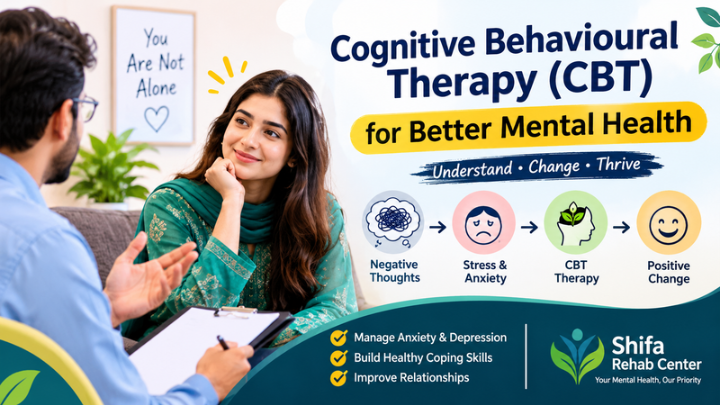
Mental health challenges like stress, anxiety and depression can affect daily life and relationships. Cognitive Behavioural Therapy (CBT) helps individuals recognise negative thinking patterns and develop healthier coping strategies. Although social stigma prevents many people in Pakistan from seeking help, professional support can make a positive difference. Shifa Rehab Center provides mental health and rehabilitation support for individuals seeking professional guidance.
1. What Is Cognitive Behavioural Therapy and How Does It Work
Cognitive Behavioural Therapy (CBT) is a structured form of psychological treatment that helps individuals understand how their thoughts, emotions and actions influence one another. It focuses on identifying unhelpful thinking patterns and changing behaviours that may contribute to emotional difficulties. For example, someone experiencing anxiety may constantly expect negative outcomes, even when there is no clear reason to believe something will go wrong. These thoughts can increase stress, affect confidence and make everyday responsibilities difficult to manage.
CBT helps individuals recognise these patterns and learn practical ways to respond to challenging situations. During therapy, a qualified mental health professional assesses the individual’s concerns, discusses their personal experiences and establishes realistic treatment goals. Sessions may include guided discussions, thought-recording exercises and practical activities that help patients develop healthier coping strategies. Progress is reviewed regularly so the therapist can adjust the treatment approach according to individual needs.
How CBT Helps Change Negative Thinking Patterns
Negative thinking patterns can influence how individuals interpret situations and respond to everyday challenges. For instance, a student in Pakistan who receives a lower examination grade may believe they are incapable of succeeding academically. Similarly, an employee facing workplace pressure may assume they will lose their job after making a minor mistake. These assumptions can increase anxiety and reduce self-confidence.
CBT helps individuals identify common thinking patterns, including catastrophising, excessive self-blame and always expecting the worst. Therapists encourage patients to examine the evidence behind their thoughts, consider alternative explanations and develop more balanced perspectives. Through regular practice, individuals can learn to manage emotional reactions and make healthier decisions.
For example, someone experiencing family conflicts may learn to communicate their feelings more constructively instead of assuming that every disagreement will damage their relationships. Similarly, individuals dealing with academic or professional pressure can develop practical problem-solving skills rather than becoming overwhelmed by negative expectations. These techniques help individuals respond more thoughtfully to difficult situations.
2. What Are the Main Benefits of Cognitive Behavioural Therapy
Cognitive Behavioural Therapy offers several benefits for individuals experiencing emotional and psychological difficulties. It helps people understand the connection between thoughts, feelings and behaviours, allowing them to recognise situations that trigger stress or emotional distress. Through structured sessions and practical exercises, individuals can develop healthier responses, improve emotional awareness and strengthen problem-solving skills.
Another benefit of CBT is that it teaches practical coping strategies that individuals can use in everyday life. For example, someone experiencing workplace pressure may learn to manage overwhelming thoughts, while a person dealing with family disagreements may develop healthier communication skills. These techniques can support better relationships, improved routines and emotional regulation. However, treatment outcomes vary depending on individual needs, circumstances and consistency.
Mental Health Conditions CBT Can Help Treat
CBT is used by qualified mental health professionals to support individuals experiencing different psychological conditions. Depending on professional assessment, it may help manage anxiety disorders, depression, phobias, panic attacks, obsessive-compulsive disorder (OCD) and post-traumatic stress disorder (PTSD). Specific approaches, such as exposure and response prevention (ERP), may be recommended for OCD, while trauma-focused CBT may benefit some individuals experiencing PTSD.
Not everyone requires the same treatment approach. A qualified psychologist or psychiatrist can assess symptoms and recommend suitable care. In some cases, CBT may be combined with medication or other professional interventions to address individual mental health needs.
3. How Can You Find the Right CBT Support in Pakistan

Finding the right professional support is an important part of starting Cognitive Behavioural Therapy. Individuals should consult a qualified psychologist or mental health professional with relevant CBT training and experience. An initial psychological assessment helps professionals understand symptoms, personal circumstances and emotional difficulties. It also allows them to establish realistic treatment goals and determine whether CBT is a suitable option. Choosing an experienced professional can help patients feel more comfortable discussing their concerns and understanding their treatment options.
What Happens During CBT Sessions
During CBT sessions, patients participate in guided discussions about their thoughts, feelings and everyday experiences. Therapists may introduce practical exercises, thought-recording activities and coping techniques to help individuals recognise negative thinking patterns and manage challenging situations. Progress is reviewed regularly so that the treatment approach can be adjusted according to individual needs. Patients may also receive exercises to practise between appointments, helping them apply newly learned skills to workplace pressure, family conflicts and other everyday challenges.
Choosing the Right Mental Health Facility
When selecting a mental health facility in Pakistan, individuals should consider professional qualifications, confidentiality policies, available treatment approaches, session costs and accessibility. A suitable facility should provide a comfortable environment where patients can discuss personal concerns without fear of judgement. Shifa Rehab Center can be considered by individuals exploring professional mental health and rehabilitation support. Before beginning treatment, patients should ask about available psychological services, professional guidance and the arrangements followed to protect their privacy.
Important Factors Before Starting CBT
Before beginning Cognitive Behavioural Therapy, individuals should understand a few important aspects of the treatment process. These considerations can help them make informed decisions and feel more confident about seeking professional support.
- Professional Qualifications: Check the therapist’s relevant qualifications, clinical experience and specific training in CBT.
- Treatment Duration: Discuss the expected number of sessions, appointment frequency and progress reviews.
- Privacy and Confidentiality: Understand how personal information and therapy discussions are protected.
- Treatment Approach: Ask whether CBT alone or additional psychological support or medication may be appropriate following professional assessment.
- Family Involvement: Consider family support when helpful, while respecting the patient’s privacy, preferences and consent.
Choosing appropriate professional support can make the treatment experience more comfortable and organised. Patients should communicate openly with their therapists, discuss any concerns and understand their treatment plans. With suitable professional guidance, individuals can gradually develop practical skills to manage emotional difficulties and improve their everyday well-being.
Conclusion
Cognitive Behavioural Therapy helps individuals recognise negative thinking patterns, understand their emotions and develop healthier coping strategies for everyday challenges. Seeking professional psychological support is a positive step towards better mental well-being and nothing to feel ashamed of. Individuals in Pakistan experiencing persistent emotional difficulties should consider consulting a qualified mental health professional. Shifa Rehab Center offers a support option for those exploring professional mental health and rehabilitation services.




Pingback: Ice Addiction Treatment in Pakistan | Recovery Guide